





In a world where problem-solving often feels like a game of Tetris, creativity skills development stands out as the ultimate power-up. It’s not just for artists or writers; everyone can tap into their inner innovator. Imagine transforming mundane tasks into exciting challenges while impressing friends and colleagues with your out-of-the-box thinking.
Understanding Creativity Skills Development
Creativity skills development encompasses various approaches that foster innovative thinking across multiple domains. Individuals often enhance these skills through deliberate practice and exposure to diverse experiences. Engaging in brainstorming sessions encourages idea generation, while working collaboratively cultivates an environment of shared creativity.
Problem-solving exercises, such as design thinking workshops, actively promote the application of creativity in real-world scenarios. Regularly setting challenges allows individuals to stretch their creative boundaries, making it easier to find solutions that others may overlook. Learning from failure plays a crucial role; each setback provides insights that contribute to improvement and refinement of creative strategies.
Training techniques, including mindfulness exercises and journaling, can help increase awareness of one’s creative potential. These techniques often unlock hidden ideas and facilitate a more open-minded approach to challenges. Experimenting with new hobbies or artistic pursuits broadens perspectives, exposing individuals to different ways of thinking.
Reading books on creativity and innovation can further inspire individuals to develop their creativity skills. Utilizing resources from experts provides valuable insight into the creative process. Communities that share creative goals often motivate individuals to push their own limits and explore new avenues.
Feedback from peers is also essential in the creativity skills development journey. Constructive criticism helps individuals fine-tune their ideas and enhances their capability to innovate. In sum, creativity skills development relies heavily on practice, collaboration, and a willingness to explore uncharted territories.
Importance of Creativity Skills Development

Creativity skills development holds significant value for individuals in various aspects of life. Enhancing these skills fosters growth and opens new opportunities for personal and professional advancement.
Benefits in Personal Life
Creativity nurtures self-expression, allowing individuals to communicate thoughts and emotions effectively. Personal relationships benefit as creative problem-solving leads to more harmonious interactions. Through creative endeavors, one develops a deeper understanding of self, fostering confidence and resilience. Engaging in creative hobbies brings joy and reduces stress, enhancing overall well-being. Individuals exposed to diverse experiences often perceive the world differently, making everyday situations more vibrant and fulfilling.
Benefits in Professional Life
Creativity is essential in the workplace, as it drives innovation and adaptability. Companies that encourage creative thinking tend to outperform competitors in problem-solving and project execution. Team collaboration thrives when diverse perspectives contribute to creative processes, leading to better outcomes. Creative professionals often identify unique solutions that promote efficiency and effectiveness. Moreover, enhanced creativity supports career advancement, as innovative individuals are frequently recognized for their contributions and leadership potential. This increased visibility accelerates professional growth.
Techniques for Developing Creativity Skills
Creative skill enhancement involves various effective techniques. These methods foster innovative thinking and problem-solving abilities.
Mind Mapping
Mind mapping serves as a visual tool designed to organize thoughts and ideas. Users can begin with a central concept, branching out into subtopics. This technique encourages free association, allowing individuals to explore connections between concepts. Using different colors and images can stimulate creativity further, making the process enjoyable. Mind maps also clarify complex subjects, breaking down challenges into manageable parts.
Brainstorming Sessions
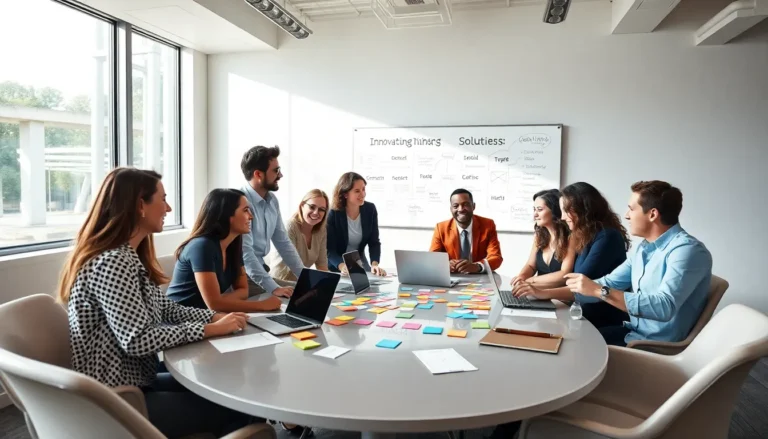
Brainstorming sessions promote collaborative idea generation. Participants contribute without judgment, fostering a safe space for creativity. Employing strategies like free writing or rapid ideation can yield a wealth of innovative concepts. Documenting every idea, regardless of feasibility, ensures that no potential solution is overlooked. Revisiting these ideas later allows for refinement and selection of the most viable options. Engaging with diverse groups enhances perspectives, enriching the brainstorming process.
Role-Playing
Role-playing techniques facilitate deeper understanding through experiential learning. Participants assume different perspectives, enabling them to explore scenarios creatively. This approach fosters empathy and can spark innovative solutions to real-world problems. Engaging in simulations allows individuals to experiment with different strategies without real-life consequences. Encouraging feedback among peers after role-playing sessions enhances learning outcomes and supports creative growth.
Measuring Creativity Skills Development
Measuring creativity skills development involves various methods that provide insights into one’s creative capabilities. Tracking personal growth and seeking external validation are essential steps in this process.
Self-Assessment Methods
Self-assessment tools allow individuals to evaluate their creative skills effectively. Questionnaires and reflection exercises serve as practical instruments for gauging creativity levels. These tools typically include prompts to assess problem-solving approaches and idea generation. Individuals can analyze their responses to understand strengths and areas for improvement. Regular self-assessment helps maintain awareness of progress and encourages ongoing development. Additionally, creative journals can provide a record of thoughts and ideas, fostering reflection and clarity.
Feedback from Peers
Feedback from peers plays a crucial role in enhancing creativity skills. Constructive criticism helps individuals refine their ideas and expand their perspectives. Engaging in discussions with colleagues sparks new insights, often leading to innovative solutions. Collaborative projects promote shared feedback, offering diverse viewpoints for idea development. Regularly seeking input encourages an open mindset and reduces fear of failure. Peer evaluations can identify unique strengths and highlight collaborative potential, reinforcing personal growth in creativity.
Overcoming Challenges in Creativity Skills Development
Creativity skills development faces several challenges, yet overcoming these obstacles fosters growth. Fear of failure often hinders progress in creative endeavors. Individuals might feel intimidated by criticism or uncertainty, stifling their willingness to take risks. Recognizing the importance of a growth mindset can transform this fear into a motivating factor.
Time constraints also pose a significant challenge. Busy schedules may limit opportunities for creative exploration. Establishing dedicated time for creativity, even in short bursts, can enhance skills. Setting aside 15 to 30 minutes daily for creative activities encourages consistent engagement.
Limited exposure to diverse experiences can restrict creativity. Engaging in different hobbies or connecting with varied groups expands perspectives. Trying new activities or exploring unfamiliar subject matter stimulates innovative thinking.
Additionally, reliance on familiar routines can lead to stagnation. Breaking free from these habits introduces fresh ideas. Incorporating techniques such as brainstorming or role-playing can inject energy into creative processes.
Lack of feedback also obstructs growth. Constructive criticism from peers refines ideas and enhances innovation capabilities. Seeking input through collaborative discussions can open doors to new possibilities.
Lastly, self-doubt can derail progress. Embracing one’s unique creative voice strengthens confidence. Celebrating small wins acts as a motivator, reinforcing the belief in creative potential.
Addressing these challenges creates an environment conducive to creativity skills development. Engaging in diverse practices, inviting feedback, and maintaining a positive mindset cultivates an enriched creative process.
Developing creativity skills is essential for navigating both personal and professional landscapes. By embracing diverse experiences and engaging in practices that stimulate innovative thinking, individuals can unlock their creative potential.
Overcoming challenges like fear of failure and self-doubt is crucial in this journey. A growth mindset and regular self-assessment can transform obstacles into opportunities for improvement.
Ultimately, fostering creativity not only enhances problem-solving abilities but also enriches life experiences, leading to greater fulfillment and success. As individuals commit to this ongoing development, they’ll find that creativity becomes a powerful ally in achieving their goals and aspirations.